Corvette Gassers: The Evolution of a Drag Racing Icon

Open headers blasting through the fenders, front wheels lifting at launch, and the unmistakable shape of a Corvette turned dragstrip beast— welcome to the wild world of Corvette Gassers.
These modified machines represent one of the most exciting chapters in both Corvette racing history and drag racing evolution, turning sleek sports cars into fire-breathing competitors that dominated NHRA’s Gas and Modified Production classes.
The Birth of the Gasser Era
To get a clear picture of Gasser history, you first have to step back into the late 1950s, when drag racing was evolving from backyard hobby to organized competition. The term “Gasser” referred to drag cars competing in NHRA’s Gas classes, ranging from A/Gas through H/Gas, with weight-to-displacement ratios determining class placement. These weren’t purpose-built race cars. They were modified production vehicles that maintained stock appearances while hiding serious performance modifications underneath.
The Corvette Gasser phenomenon emerged from this environment, where creative builders recognized the unique advantages Chevrolet’s sports cars offered for quarter-mile competition. The combination of lightweight construction, balanced chassis design, and growing aftermarket support made Corvettes natural candidates for transformation into drag racing weapons.
Why Corvettes Made Perfect Gassers


Several factors made Corvettes ideal platforms for Gasser conversion, establishing them as dominant forces in NHRA’s Modified Sports classes. The C1 and C2 generations had characteristics that drag racers could exploit for competitive advantage.
For starters, there was the 98-inch wheelbase. It provided an ideal balance between stability and weight transfer optimization. Unlike longer wheelbase vehicles that struggled with weight transfer, or shorter cars that became difficult to control, Corvettes hit the sweet spot for drag racing geometry. The roughly 50/50 weight distribution created excellent balance while allowing builders to manipulate weight transfer through suspension modifications.
Another advantage was the construction material. Fiberglass offered several advantages in an era when steel bodies dominated. The lighter panels reduced overall weight while still providing excellent durability under the stresses of drag racing. This weight advantage became even more significant when builders stripped interiors and added performance equipment. Every pound saved translated directly to improved performance.
The sports car credibility factor proved just as important. NHRA’s Modified Sports classes required two-seat vehicles, making Corvettes natural inclusions in these competitive categories. This classification advantage allowed Corvette Gassers to compete against similar vehicles rather than facing purpose-built race cars in unlimited classes.
Legendary Machines and Their Builders


The golden age of Gassers produced several legendary machines that defined the category at the time and established performance benchmarks that seemed impossible for street-based vehicles.
Big John Mazmanian’s 1961 Corvette Gasser became an instant icon in the drag racing world. Starting with a 327-cubic-inch blown engine, it ran 11.11 seconds at 129 mph in 1962 – performance numbers that stunned the racing community. Mazmanian’s attention to detail extended beyond pure performance; the car maintained show-quality appearance while delivering devastating quarter-mile times.
The evolution continued as Mazmanian upgraded to a 6-71 GMC blower and stroked engine combination, pushing the car to the top of the BM/SP class. However, by 1964, the competitive landscape had shifted enough that Mazmanian pivoted to Willys Coupes and early Funny Cars – a turning point in Gasser history.
Pete Arend’s “Mongoose” could arguably be called the peak of C2 Corvette Gasser development. This split-window 1963 Corvette typified Modified Sports class competition with its distinctive modifications. The front straight-axle conversion, quick-change rear end, and Hilborn-injected big-block engines created a formidable combination that dominated its class.
The Mongoose routinely lifted its front wheels in first gear, creating the visual drama that made Corvette Gassers crowd favorites. Arend’s passion for competition led to engine upgrades culminating in a 426 Hemi installation, proving that successful Gasser builders constantly evolved their combinations to keep those competitive edges.
The Competitive Landscape
Corvette Gassers competed in an environment where class rules and competitive pressures constantly pushed builders toward innovation. The NHRA Gas classes created a framework where displacement and weight determined competition, encouraging builders to find creative solutions within regulatory constraints.
The Modified Sports classes where many Gassers competed featured some of the most intense competition in Corvette racing history. These classes attracted serious builders with substantial budgets and engineering expertise, creating an arms race that pushed performance boundaries continuously forward.
Performance capabilities evolved rapidly throughout the 1960s. Early models that ran high 12-second quarter-miles soon gave way to machines capable of high 8-second passes at speeds exceeding 150 mph. This dramatic performance improvement reflected both engine development and chassis optimization as builders learned to extract maximum potential from the Corvette platform.
Gasser History: The End of an Era
The golden age of Corvette Gassers effectively ended in 1981 when NHRA eliminated the Gas and Modified Eliminator classes that had provided their competitive home. This reorganization merged many former Gas class vehicles into Competition Eliminator or Stock/Super Stock brackets, fundamentally changing the nature of the competition.
The class changes reflected broader evolution in drag racing toward more specialized vehicles and professional competition. As purpose-built race cars became more sophisticated and expensive, the modified production car concept that defined Gassers became less competitive and economically viable.
Many cars were retired, converted to other uses, or stored away as their original competitive venues disappeared. The shift marked the end of an era when innovative gearheads could build competitive race cars in home garages using production vehicles as starting points.
Suspension Lessons That Still Matter Today

The suspension wizardry that made Corvette Gassers work wasn’t accidental. These builders figured out principles that remain relevant for anyone serious about drag racing performance. Ripping out Corvette’s sophisticated independent rear suspension in favor of crude ladder bars might seem like engineering blasphemy, but it solved real problems that IRS couldn’t handle under launch loads.
The complex geometry changes that made independent suspension brilliant for road courses became liabilities when trying to plant 1,200 horsepower through bias-ply tires. Ladder bars eliminated variables, giving drivers consistent launches even when pushing power levels that would overwhelm more sophisticated systems.
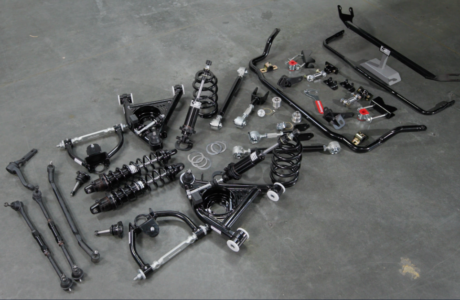
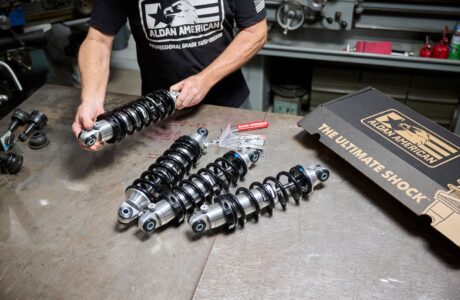
Modern Corvette Gasser builders face interesting choices when building tribute cars or restoring originals. Contemporary suspension components offer capabilities that 1960s pioneers could only dream about – adjustable shocks with precise valving control, springs with consistent rates, and hardware that won’t fail under extreme loads. The challenge lies in applying this technology while preserving the essential character that made these cars special.
Building today means understanding both the historical context and the engineering principles that made them work. These weren’t crude hot rods thrown together in backyard garages – they sparked serious engineering solutions to specific performance problems. The fact that modern drag racers still use ladder bars and similar rigid rear suspension today proves that those pioneering builders got the fundamentals right.
The Corvette Gasser taught us that sometimes the best engineering solution is the one that works consistently, even if it’s not the most sophisticated on paper.